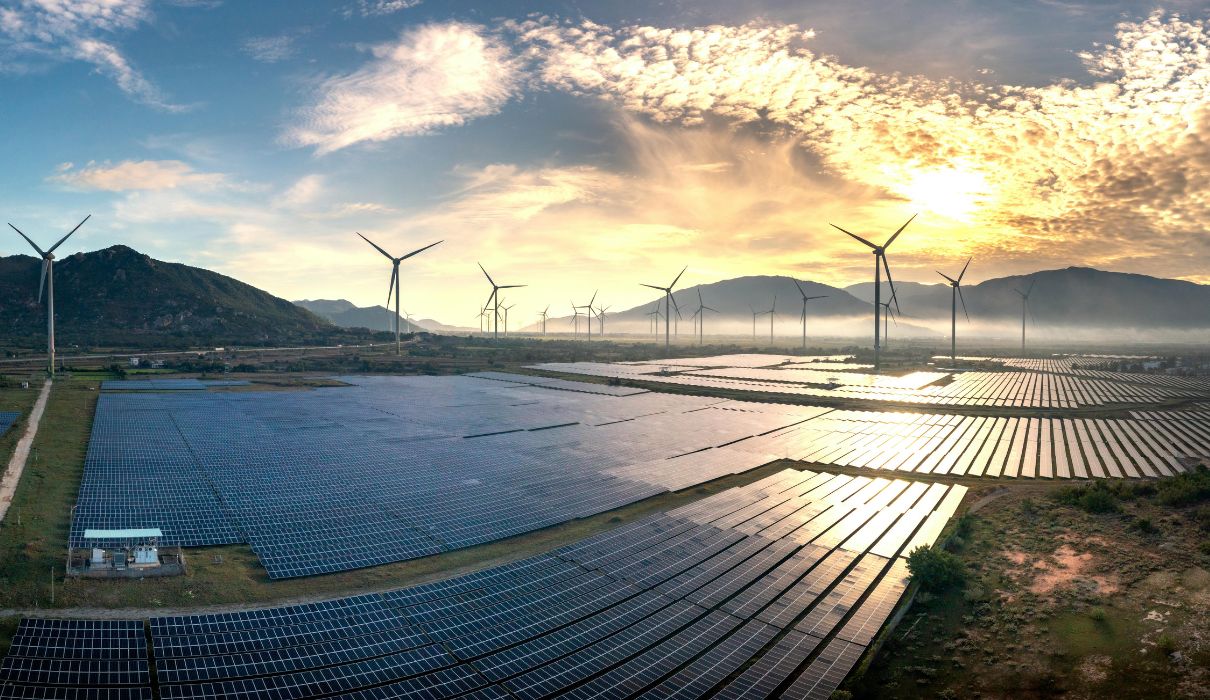
Asia now accounts for the majority of global solar installation annually. Pricing has fallen further, policy continues to shift, and the buyer landscape has diversified dramatically. Here's what the picture looks like in 2026 — and what it means if you're considering a system.
The price story
Solar hardware costs have continued to fall. Panel manufacturing capacity in China expanded faster than demand in the early 2020s, pushing wholesale panel prices to new lows. Inverter prices have followed, though less dramatically.
What this means for buyers: the hardware portion of a typical system now represents a smaller share of total cost than it did five years ago. Soft costs — site survey, design, permitting, installation labour, interconnection — have become proportionally more significant. This has implications for how to evaluate quotes: saving 10% on panels no longer moves total project cost the way it used to.
Policy trends across major Asian markets
Feed-in tariffs are mostly gone
The generous feed-in tariffs of the 2010s have largely been phased out across the region. In most markets, exported solar now earns either a modest net-metering credit or a small export payment — rarely more than the retail electricity rate, often less.
Implication: systems now optimise for self-consumption, not export. This changes sizing logic. Oversizing to maximise export is rarely economic.
Net-metering rules vary widely
Some markets offer one-for-one net-metering (export kWh credited against import kWh). Others use net-billing (export credited at a lower rate than import). Others cap net-metering at specific system sizes. The economics of a system depend heavily on which regime applies to you.
Commercial and industrial incentives are strengthening
While residential incentives have thinned, many countries have introduced or expanded commercial incentives — accelerated depreciation, tax credits, green loan programs, and simplified interconnection for systems under specific sizes. Industrial buyers often have more favourable economics now than three years ago.
Grid integration becomes the bottleneck
In several markets, the constraint on new solar is no longer economic — it's the grid's ability to absorb it. Some utilities have imposed interconnection queues, curtailment clauses, or caps on rooftop solar in particular feeders. Worth checking before committing to a large system.
Battery storage is crossing a threshold
Battery prices have fallen enough that in some markets, adding storage now pays back within the battery's own useful life — not universally, but in more cases than three years ago. The turning points tend to be:
- Markets with poor net-metering (storage captures value that would otherwise be exported at low rates).
- Time-of-use tariffs with wide peak/off-peak spreads.
- Operations with frequent outages where backup value is substantial.
If you've previously priced storage and concluded it didn't pencil, it's worth re-running the numbers.
What to watch
- Bifacial panels becoming the norm on ground-mount installations, adding marginal yield for minimal cost premium.
- Hybrid inverters becoming the default spec even for customers not installing batteries today, preserving the upgrade path.
- Virtual net-metering and community solar models emerging for buildings that can't host their own systems.
- Battery-first design in markets with punitive export rules — sizing the battery before the panels.
- Longer performance warranties as tier-1 manufacturers extend from 25 to 30 years.
What this means for buyers in 2026
- The price of hardware is no longer the deciding variable. Installation quality, warranty backing, and design competence matter more.
- Self-consumption economics now drive system sizing in most markets. Right-size for your load curve, not for maximum roof coverage.
- Reconsider storage if you priced it more than 18 months ago.
- Verify your utility's interconnection status before designing a large system.
- Warranty terms have become a genuine differentiator — longer product and performance warranties are available from tier-1 manufacturers and worth negotiating for.
The broader picture
Solar in Asia in 2026 is a more mature industry than it was five years ago. The buyers who do well now aren't the ones chasing the lowest headline price. They're the ones buying right-sized systems, from installers who stand behind their work, with warranty terms in writing. That formula has become simpler to execute because the market has — slowly, unevenly — stopped rewarding cut-corners operations.
It's a better time to buy solar than almost any point in the past decade. Also a better time to be careful about whom you buy it from.